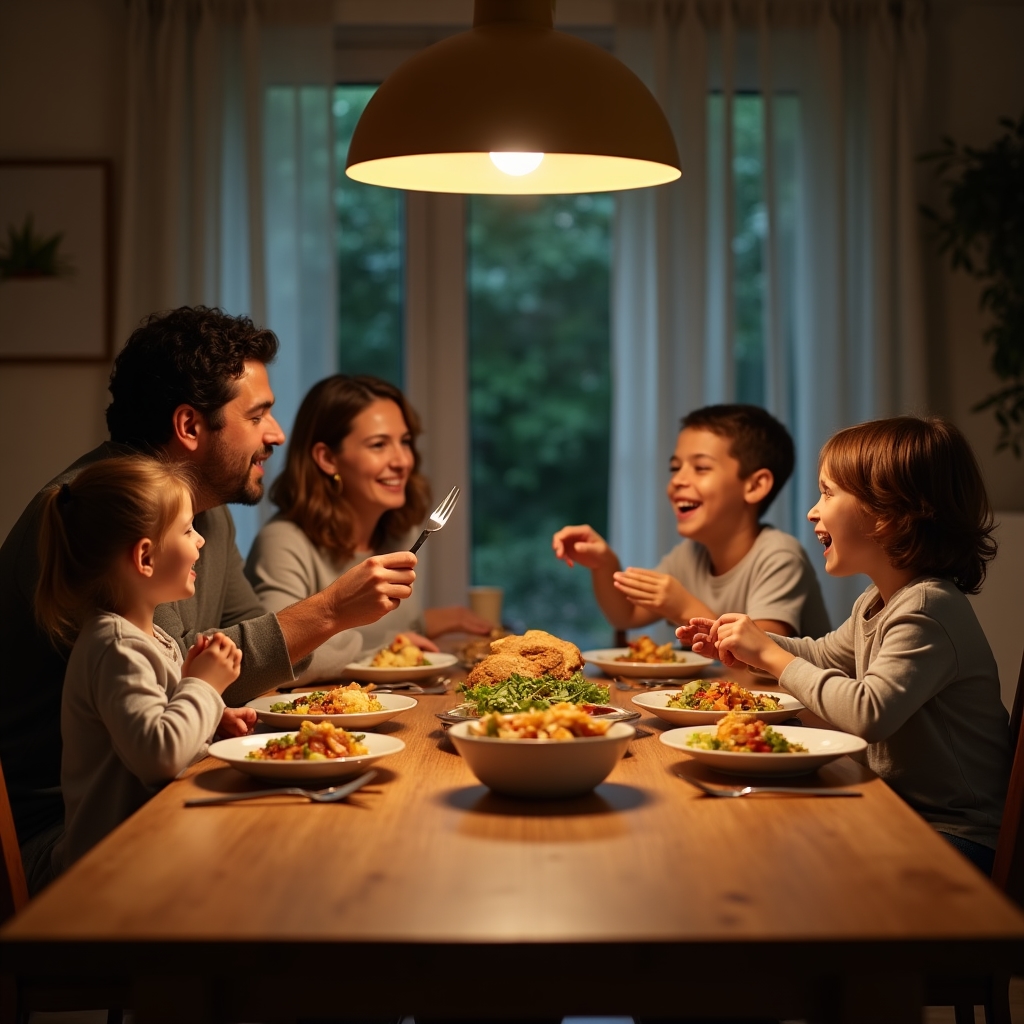
Parenting Education, Live & Online

Raising kids who eat well starts at the counter, not the plate.

A two-session workshop for parents built on developmental psychology, not meal plans. We look at what actually shapes a child's relationship with food: participation, autonomy, and the ordinary rhythm of family meals.

This is parenting education, not pediatric or dietary advice for individual children.

Parent and young child cooking together at a kitchen counter, both smiling while stirring a bowl
Two live sessions, real-time questions welcomed

Most guidance parents receive about children's eating focuses on what to serve, what to withhold, and how to enforce it. This workshop takes a different starting point: children build lasting food habits through repeated, low-pressure exposure and hands-on involvement, not through rules imposed at the table. What follows is an explanation of why that distinction matters, and what it looks like in practice.

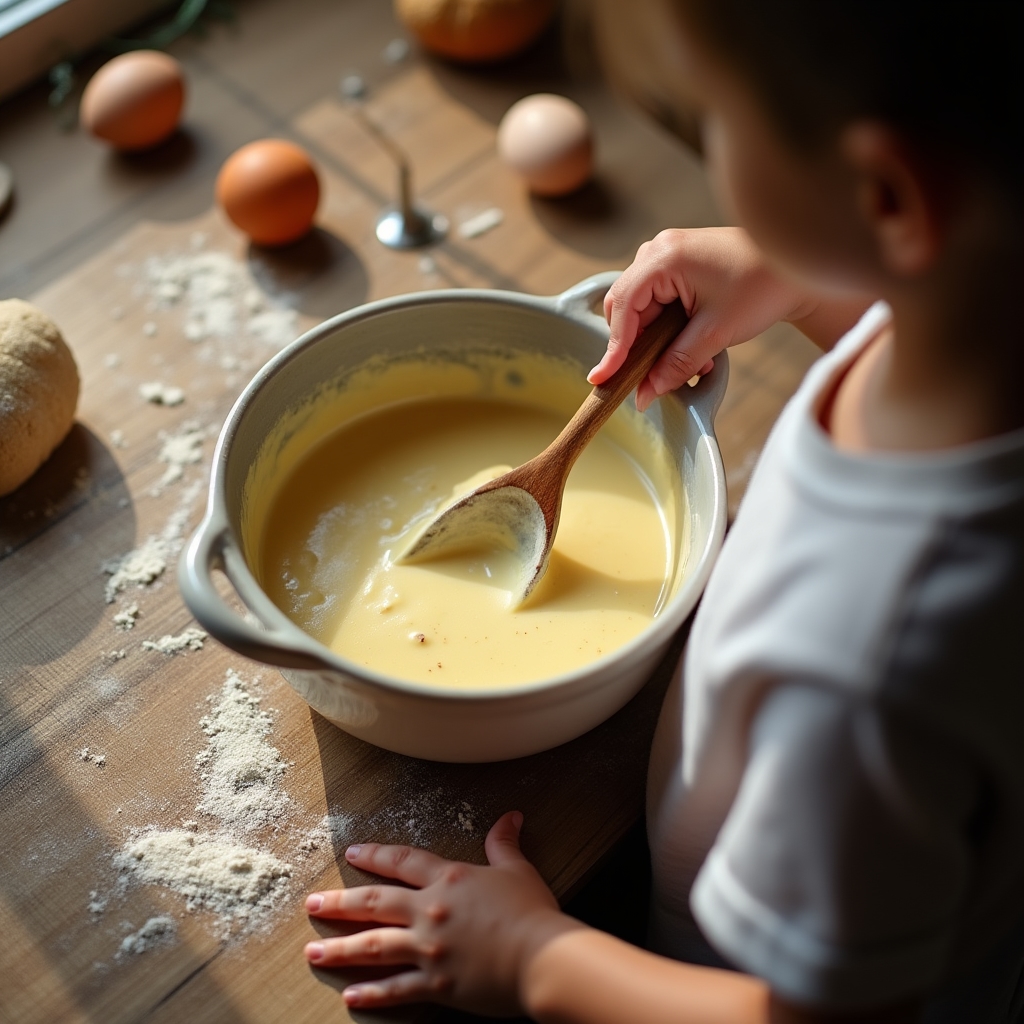
Close-up of a five-year-old's hands stirring batter in a mixing bowl on a wooden counter
Involvement builds familiarity before it builds acceptance
Why This Approach

Restriction teaches vigilance. Involvement teaches curiosity.

When a food is labelled "bad" or placed off-limits, children don't stop wanting it. Research in developmental psychology suggests the opposite tends to happen: restricted foods often become more desirable, and the child's internal sense of hunger and fullness gets replaced by external rules about what's allowed.

Involvement works differently. A child who pours the lentils, smells the garlic, or tastes the sauce while it simmers is building a memory of that food through their own senses, not through a lecture. That sensory familiarity is what tends to precede willingness to actually eat something new. This workshop walks through why that sequence matters and how it plays out at home, at a pace that fits a five-year-old's attention span and a parent's real evening schedule.

  • Grounded in developmental and feeding psychology research, explained in plain language
  • Built for the reality of weeknight cooking, not a test kitchen
Four Ideas That Anchor the Workshop

What we actually unpack across two sessions

Each of these ideas comes from research on child development and feeding, and each one gets a full, practical explanation, not just a mention.

Why "good" and "bad" food labels backfire

When foods are sorted into moral categories, children absorb the judgment more than the nutrition. Developmental psychology research points to a common pattern: labelled foods become emotionally charged, which can increase either avoidance or secretive overeating later on. We look at language that describes food without ranking it.
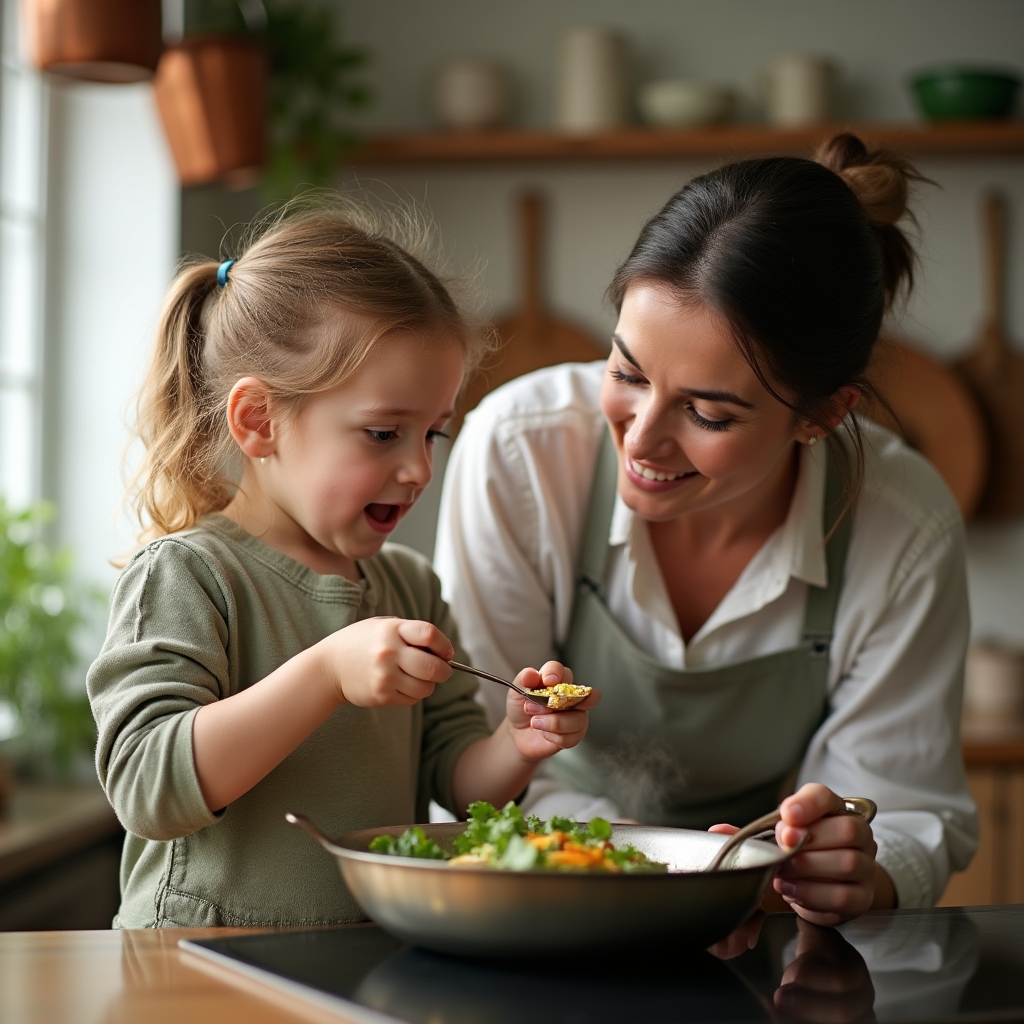
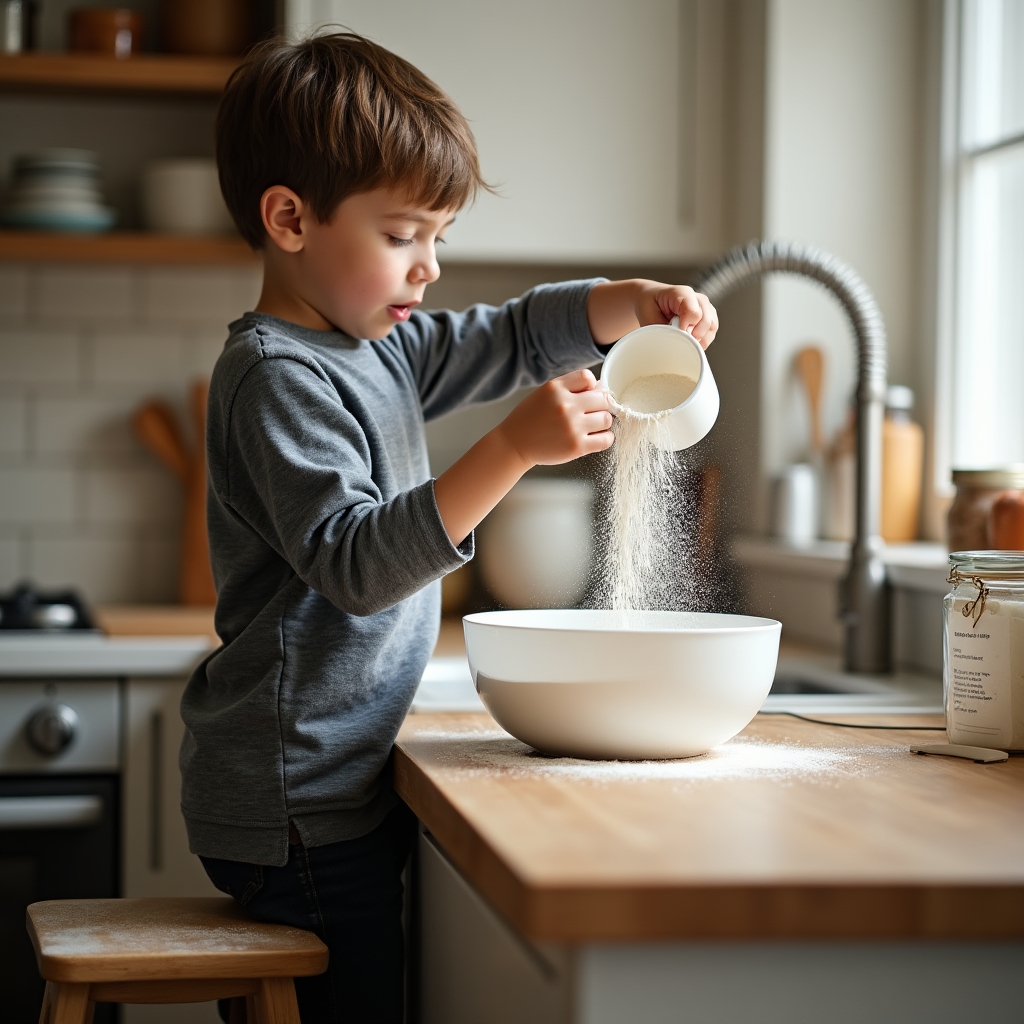
Stirring, pouring, and tasting build acceptance

A five-year-old given a real task in the kitchen, cracking an egg, washing greens, stirring a pot, isn't just being entertained. Repeated, low-stakes contact with an ingredient reduces the wariness that often greets unfamiliar foods, and that reduction tends to happen well before the food ever reaches the plate.

Why "finish your plate" disconnects hunger cues

Insisting a child clear their plate shifts the decision about when to stop eating from the child's body to an external rule. Over time, this can dull a child's ability to notice their own fullness. We look at how portioning and pacing can respect appetite instead of overriding it.

What ordinary family meals do that lectures can't

Sitting at a shared table, watching adults eat a range of foods without commentary, does something a nutrition talk cannot replicate: it normalizes variety through repetition and modelling. We talk through what makes a family meal effective for this purpose, regardless of how simple the food is.

Format

Two live sessions, built to be attended together or separately

Each session runs live online with time set aside for questions from parents. Sessions are offered periodically in pairs, roughly a week apart, so there's space to try something between them.

01
Live discussion, roughly 75 minutes

Why Kids Push Back: The Psychology of Labels and Plate Rules

This session covers how "good food, bad food" language forms in a child's mind, and why the instinct to require a clean plate often works against the goal parents actually have. We walk through the research behind hunger cue development and discuss language and mealtime habits that support it instead.

  • Why moralized food language creates the opposite of the intended effect
  • How portion pressure interferes with a child's own appetite regulation
  • Alternative phrases and routines parents can start using the same evening
02
Live discussion, roughly 75 minutes

Hands In, Not Just Fork In: Building Acceptance Through the Kitchen

This session focuses on practical involvement: what tasks suit a five-year-old versus an eight-year-old, how to manage the mess and time cost, and why the family meal table does work that no explanation of nutrients can substitute. Expect concrete, age-adjusted examples rather than abstract theory.

  • Age-appropriate kitchen tasks that build familiarity with new ingredients
  • Managing the real trade-offs of cooking with a young child on a weeknight
  • How to structure a family meal so modelling happens naturally
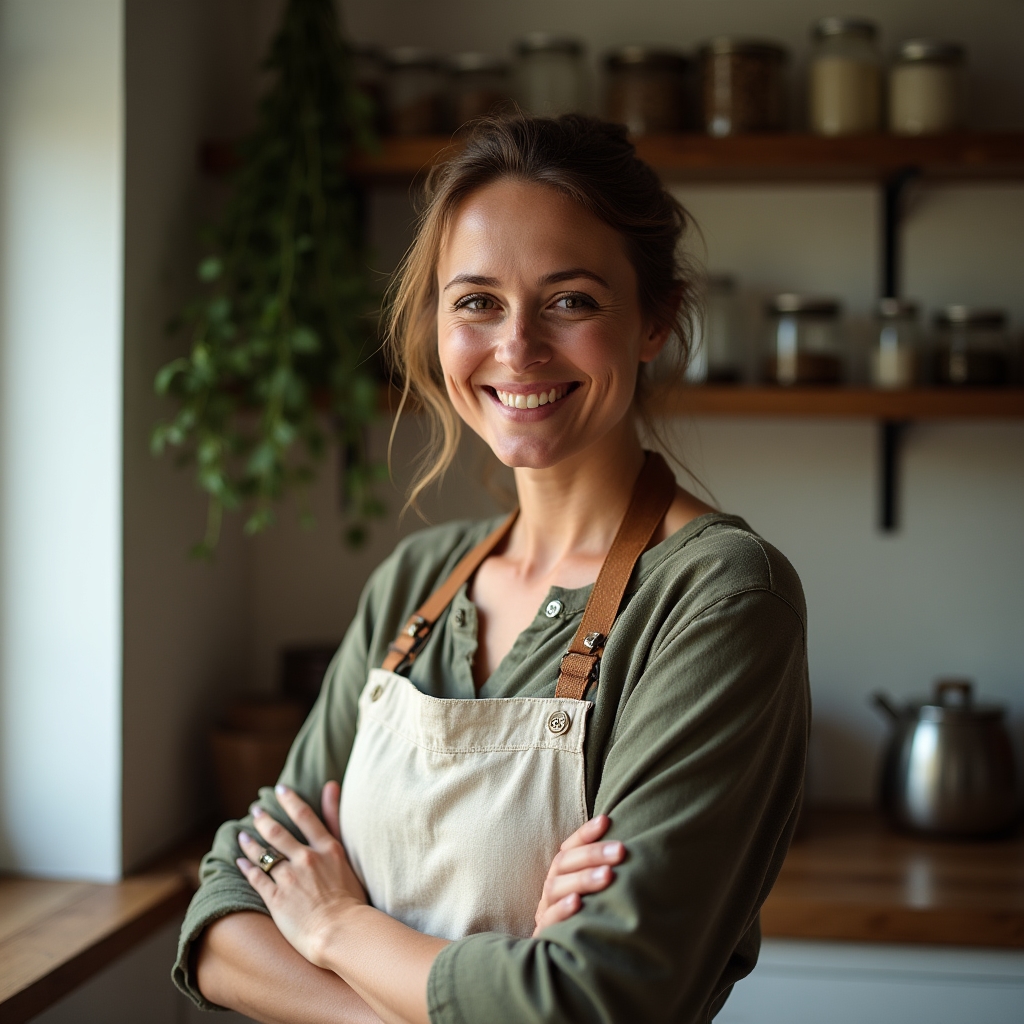
Portrait of the workshop facilitator, a woman in her forties, standing in a home kitchen
Who Leads the Sessions

A parenting educator, not a clinician

The workshop is facilitated by an educator whose background is in child development and parent education, drawing on published feeding and developmental psychology research. Sessions are framed around behavior, language, and family routine, not menus or nutrient targets. If a family has a specific medical, allergy, or growth concern, that conversation belongs with a pediatrician or registered dietitian, and the workshop is explicit about that boundary throughout.

The material draws on peer-reviewed research into feeding practices, autonomy-supportive parenting, and sensory exposure, translated into plain, usable language for a live audience of parents rather than a clinical one.

Join a Session

Get details for the next two live sessions

Send a message through the contact page and we'll share the current schedule, format, and what to prepare. There is no product to purchase and no supplement to sign up for, just two live conversations and the materials that go with them.

Get Session Details
Common Questions

Before you reserve a seat